Building smart, specialised vessels: how Holland Shipyards Group turns customer questions into practical innovation
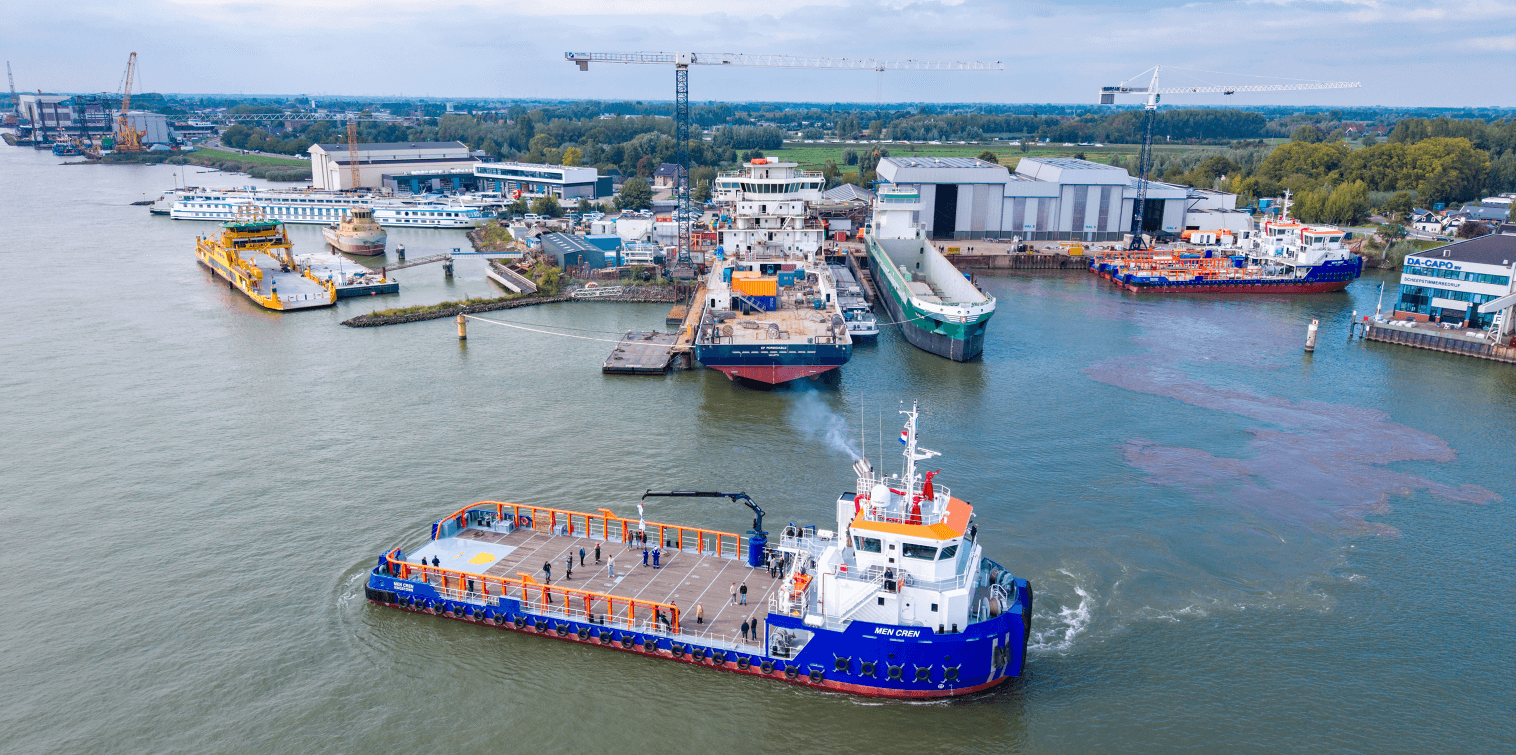
A yard built around custom solutions, not standard products
Holland Shipyards Group does not work from a catalogue of standard products. According to Shanna, their strength is the opposite: thinking with the client and building specialised vessels that solve a specific operational need.
Clients often come with a clear idea, sometimes even with an existing design. The role of the yard is then to challenge, improve and help make choices that are workable in real operations. Shanna describes it simply: shipbuilding is not only about delivering a vessel, it is about understanding what the client needs and translating that into a vessel that performs.
This also shapes how customers experience the company. Many feel comfortable enough to walk in, grab a coffee, and continue a conversation without formality. That ease reflects long-term relationships and a working style where collaboration is the default.
Autonomy as an answer to the crew challenge
One of the strongest themes in the company’s current work is autonomy. Shanna is clear that it is not positioned as a trend for its own sake. The driver is operational: many ferry owners struggle to find captains and crew. If a vessel can operate with more automation, it can reduce the pressure on staffing. That can make it easier to keep services running.
One of the strongest themes in the company’s current work is autonomy, not as a showcase technology, but as a response to real operational pressure. Ferry operators across Europe struggle to find qualified captains and crew. Increasing levels of automation can help keep services running reliably, especially in urban environments.
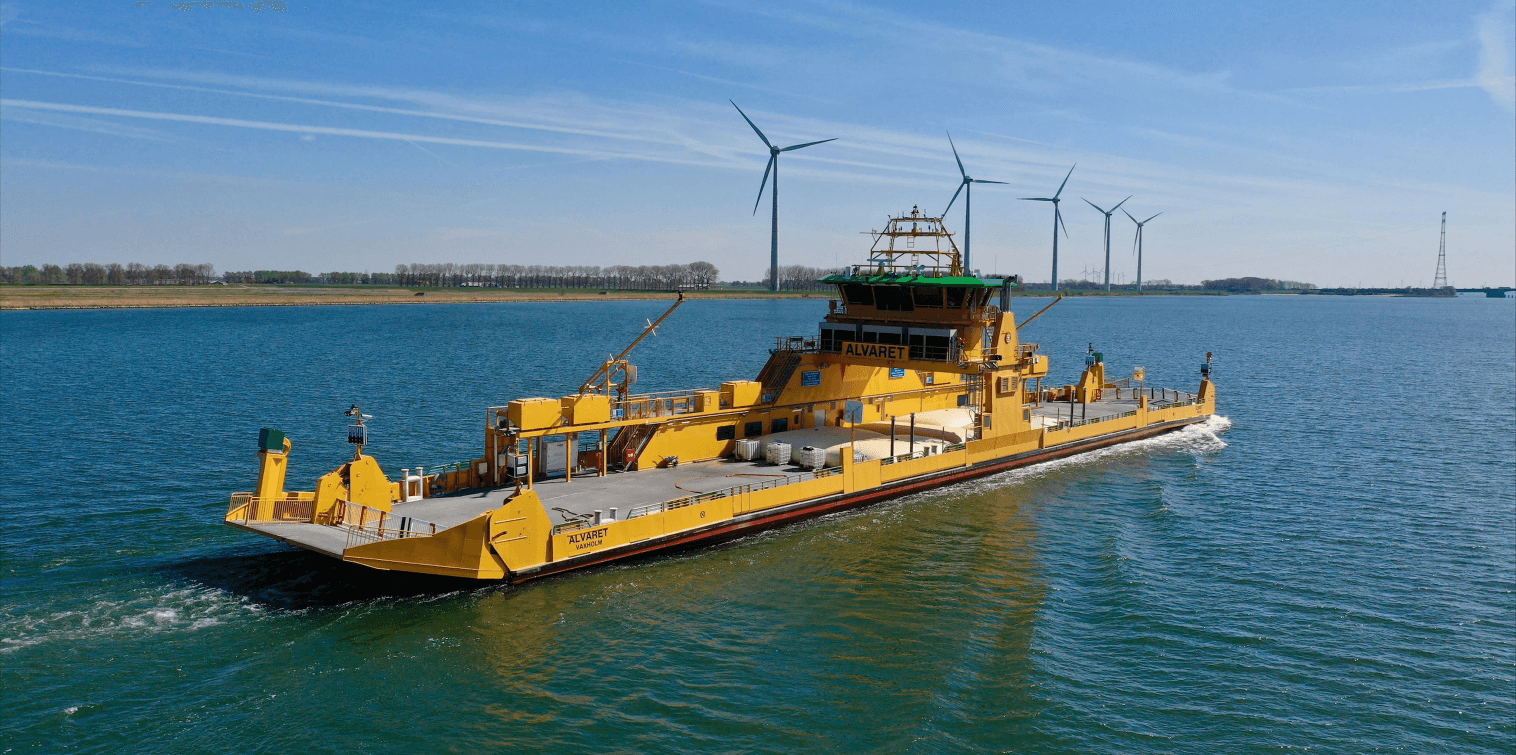
A recent example is the autonomous ferry developed with technology partner Roboat. The fully 3D-printed vessel was originally intended to operate on the Seine during the Olympic Games in Paris. Although that plan was ultimately cancelled due to changes outside the project partners’ control, the ferry itself was completed and has since moved forward in a different form.
Recently, Holland Shipyards Group demonstrated the autonomous ferry in Paris to a selected group of partners and clients. The demonstration focused on practical use in dense urban settings: short crossings, predictable routes and minimal infrastructure. The vessel operates emission free, is designed with circularity in mind, and can be controlled through a simple interface in a highly controlled environment.
For the yard, the Paris project fits into a broader pattern. Whether it is a ferry in Sweden, France or elsewhere, autonomy is treated as an operational tool, not a headline. “What we learn on one vessel always helps improve the next one,” Shanna adds.

Human capital and the pressure on Dutch shipbuilding
Growth brings another challenge: people. Shanna notes that office roles are often easier to fill than hands-on technical work. The biggest gap is skilled people who want to weld, engineer, work with wood, and build. The company does bring in people from abroad, but the wider issue remains: fewer young people choose practical work, while the sector still depends on it.
She also describes a bigger pressure point the entire industry faces: international competition, rising wages and rising costs in the Netherlands. Many yards are busy today, but still ask the same question in the background: what does the landscape look like in five years if more work moves to countries with lower labour costs and growing quality levels?
For Holland Shipyards Group, the answer is to stay flexible and keep moving with the market. The ambition is not a fixed prediction, but a commitment to adapt and to keep delivering vessels that solve real problems for owners and operators.
Looking ahead
Holland Shipyards Group is scaling, taking on larger and more complex vessels and building expertise in autonomy and practical sustainability. “We are not chasing trends,” Shanna concludes. “We focus on what our clients need and how we can help them operate better.”
In that combination, openness, collaboration and constant improvement, the company is strengthening the wider maritime ecosystem that connects to Rotterdam, while delivering specialised vessels for the next phase of European operations.
Interested in connecting?
Follow Holland Shipyards Group via LinkedIn or get in touch through their website.
All photographs are courtesy of Holland Shipyards Group.